
RESEARCH IN THE HEADLINES: DR. JESSE GOLIATH
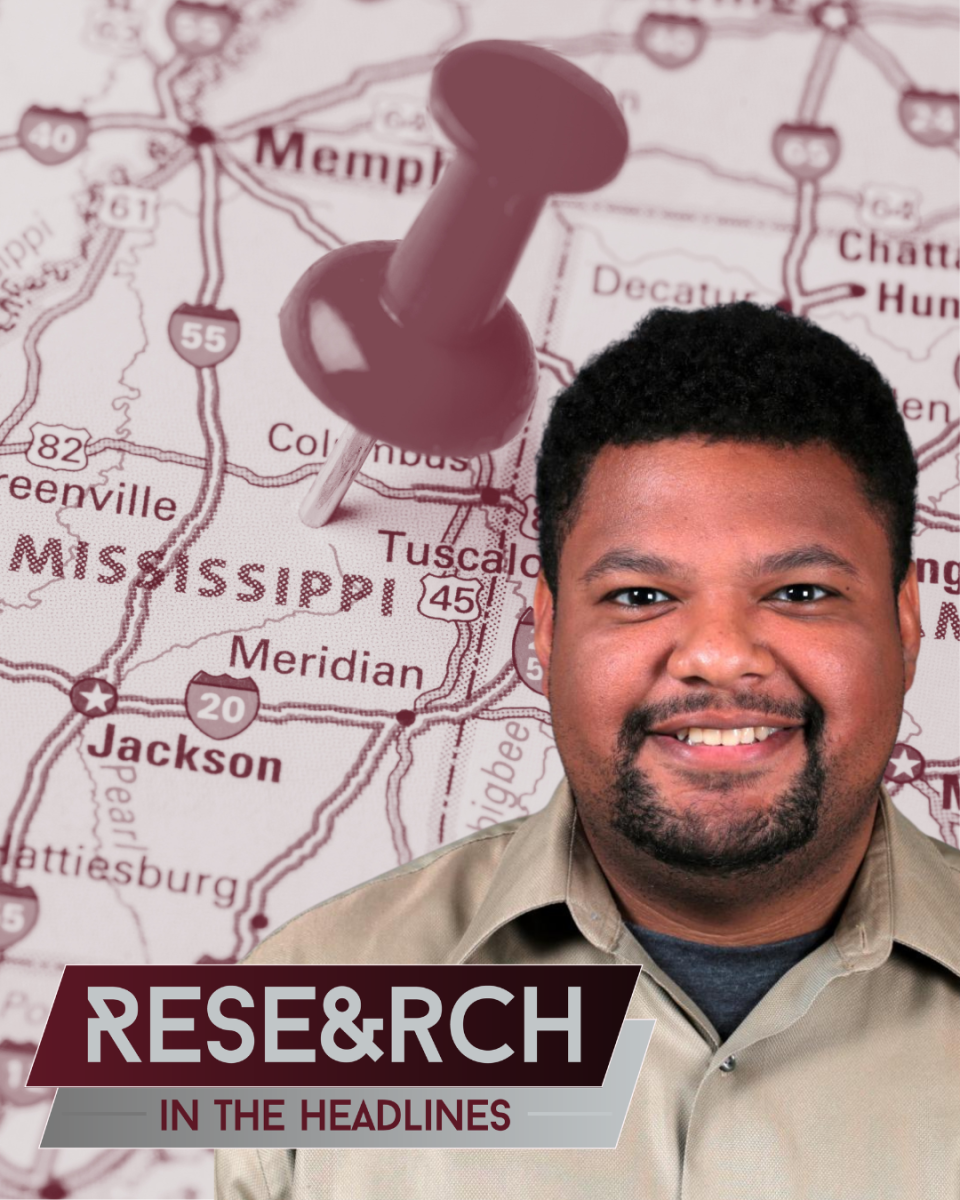
When missing-person cases make headlines, MSU research looks for patterns
As the recent disappearance of Nancy Guthrie has drawn renewed attention to forensic anthropology, a Mississippi State faculty member’s research is helping bring answers to families searching for missing loved ones across Mississippi.
Jesse Goliath, an assistant professor of anthropology and director of MSU’s Mississippi Forensic Anthropology Laboratory, studies missing persons, human remains and forensic science. But for Goliath, missing-person cases are more than the subject of true-crime podcasts and television dramas. They are also an opportunity to identify patterns that could help investigators better understand who goes missing in Mississippi—and where they may be found.
His research and applied work connect science with a pressing public-safety issue, particularly in a state where many communities are rural and law enforcement agencies may have limited resources.
“People are fascinated with missing persons and true crime and ‘whodunit’ stories,” Goliath said. “But I try to connect that back to Mississippi.”
Through research into missing-person cases, Goliath and his collaborators are working to identify trends in who disappears, including age, race and gender. Those patterns can provide investigators with information that may help guide searches and identify communities or populations at greater risk.
For example, missing-person patterns may look different in Mississippi than they do in other parts of the country. Goliath said researchers are examining questions such as whether older men go missing at higher rates in Mississippi and whether the number of missing young Black women is increasing.
The research also can reveal broader patterns connected to the communities where people go missing.
“We’re seeing people go missing in areas that are already impoverished,” Goliath said, noting that those communities may also face challenges such as food deserts, infrastructure problems and limited access to hospitals or mental health care.
In that way, missing-person research can become more than a tool for solving individual cases. It can also help identify broader public-health and public-safety concerns.
Goliath’s work includes the Mississippi Missing Persons Repository, which helps organize information related to missing-person cases, as well as collaboration with the MSU Police Department on human-remains recovery efforts. He emphasizes, however, that the work is a team effort.
“I tell people I do have a cool job, but there are other people doing this. It’s not just me. It’s a team,” Goliath said. “There are grad students working with me on the repository. The MSU Police Department is working with me on the recovery team. So, it’s not just me. I just get to be the face of the things.”
His interest in forensic science began early, fueled by a love of history, science, detective novels and characters such as Batman and Sherlock Holmes.
“I’ve always been fascinated with how people understand crime and investigate crime,” he said. “I always liked the science aspect of it—how do we actually solve crime using science and using knowledge to piece together these cases?”
Now, Goliath is helping prepare the next generation of forensic scientists. MSU recently approved a new undergraduate major in human forensic science, which is pending approval from the Institutions of Higher Learning. If approved, the program is expected to launch in January 2027.
The four-year degree would prepare students for entry-level careers in crime laboratories and forensic science, with students completing an internship or co-op during their third year with a partnering agency, potentially including the Mississippi Bureau of Investigation or local law enforcement agencies.
As true-crime stories continue to capture public attention, Goliath’s work offers a reminder that behind every headline is a real person, a real family and a community seeking answers.
And sometimes, finding those answers begins with looking beyond the individual case to understand the patterns.
Contact Emma Hardy