
RESEARCH IN THE HEADLINES: Dr. Lourdes Cardozo-Gaibisso
Helping multilingual students succeed in science
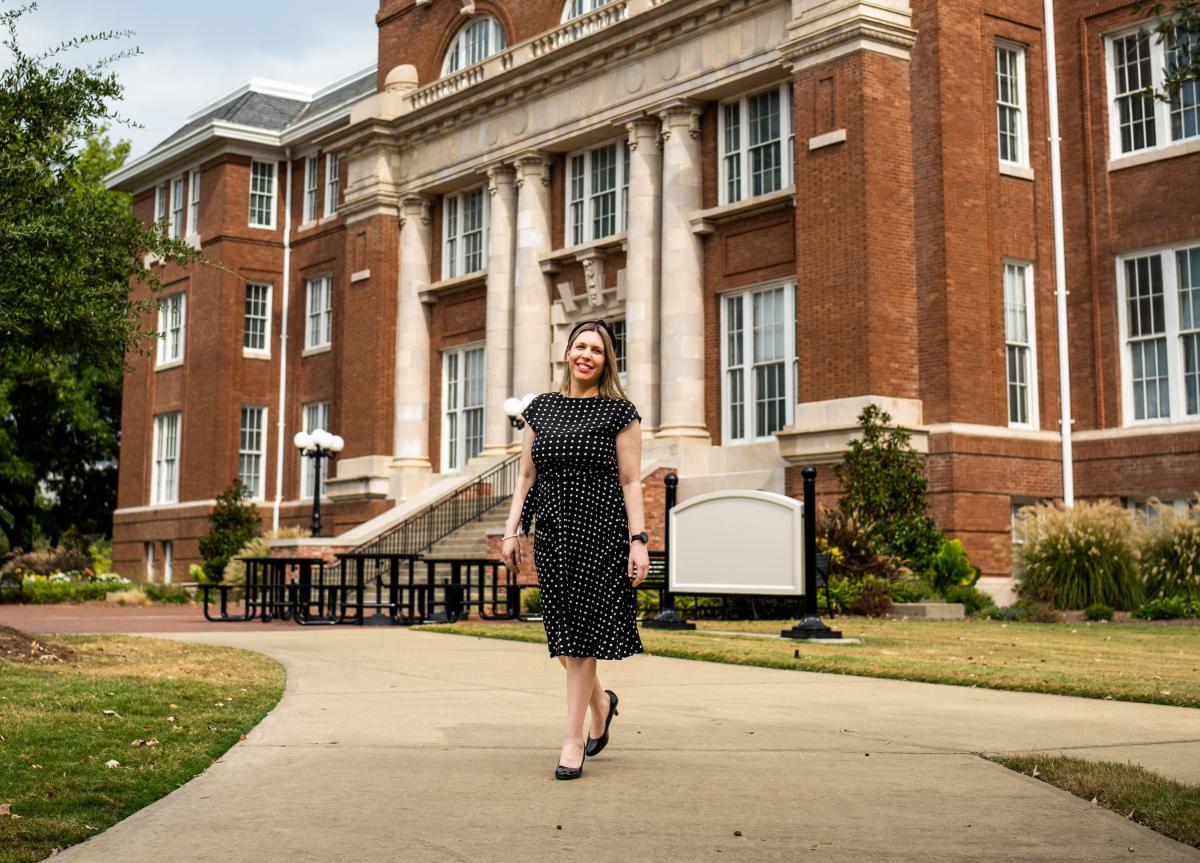
From genetics lessons to environmental education, Mississippi State researcher Lourdes Cardozo Gaibisso is working to make science more accessible for multilingual students. An assistant professor of TESOL and linguistics in MSU’s Department of English, Cardozo Gaibisso studies how multilingual students learn science and how educators can create more effective learning experiences.
Through a Design-Based Research and Implementation (DBRI) approach, she develops, tests and refines instructional strategies that help connect science concepts to students’ languages, cultures and communities.
Her work comes at a time when multilingual learners make up a growing segment of classrooms across the United States. Through research projects spanning Mississippi, Florida and beyond, Cardozo Gaibisso is helping educators create learning experiences that support student success while encouraging greater participation in science, technology, engineering and mathematics fields.
One of her newest projects, Sowing Environmental Multilingualism: Integrating Learning, Linguistics and Action in Science, or SEMILLAS, examines how teachers can use local environmental issues to engage multilingual students in science learning. Working with communities in Mississippi, researchers explore how topics such as water quality, climate challenges and natural disasters can become meaningful teaching tools in the classroom. Cardozo Gaibisso is working alongside Principal Investigator Ayça Fackler, an assistant professor at the University of Missouri.
The project also helps educators draw on students’ cultural backgrounds, language skills and community knowledge when teaching science concepts.
“True scientific excellence begins with understanding the land beneath our feet and the languages spoken in our homes,” members of the Science Literacy for Excellence Research Collaboratory write on the group’s website.
Cardozo Gaibisso founded and directs the Science Literacy for Excellence, or SL4E, Research Collaboratory at MSU’s Social Science Research Center where she serves as a research fellow. The interdisciplinary group––including colleagues at the University of Missouri, the University of Florida and Universidad ORT Uruguay––brings together educators, scientists and researchers to improve science literacy and educational opportunities for multilingual learners. Her research is currently funded by the National Academies of Sciences, Engineering, and Medicine (NASEM) Gulf Research Program Early-Career Research Fellowship, Education Track and the Empowering K-8 Youth Through Place-Based Education Projects and Programs. For more, visit: https://sl4e.ssrc.msstate.edu/
Another project, Sustainable Environmental, Multidisciplinary, Bilingual Research and Action in Rurality, known as SEMBRAR, partners with the Starkville Oktibbeha School District and the University of Florida to promote environmental literacy among students and families in Mississippi and Florida. Researchers are studying how hands-on learning and community engagement can strengthen understanding of environmental issues while encouraging active participation in local communities. Cardozo Gaibisso serves as principal investigator with collaboration from Co-Principal Investigator Leynar Leyton Naranjo from the University of Florida.
Cardozo Gaibisso’s research also extends into science classrooms. In a recent publication, she and colleagues developed teaching strategies to help middle school students learn Mendelian genetics. Designed with multilingual learners in mind, the lessons emphasize discussion, collaboration and hands-on activities rather than relying heavily on technology.
The study found that creating more engaging and culturally responsive science learning experiences can help broaden participation in STEM fields, particularly among students who historically have been underrepresented.
National organizations have taken notice of Cardozo Gaibisso’s work. She was one of only five researchers nationwide selected for the 2024-26 Early-Career Research Fellowship in Education Research through the Gulf Research Program of the National Academies of Sciences, Engineering and Medicine. She published “Using Translanguaging Strategies While Teaching Mendelian Genetics” in March 2026 in The American Biology Teacher journal, along with coauthors from the University of Georgia including Georgia Hodges, Shaugnessy McCann, Pamela Perry and Katelyn Wasson.
Cardozo Gaibisso earned her doctorate in language and literacy education, TESOL and world language education from the University of Georgia. Her research focuses on multilingual science education, teacher preparation and environmental literacy, with the goal of creating learning opportunities that help all students thrive.
Through projects that connect science, language and community engagement, Cardozo Gaibisso’s work is helping educators rethink how science is taught and who has access to meaningful STEM learning experiences.
Contact: Emma Hardy