
RESEARCH IN THE HEADLINES: Dr. Holli Seitz
How health messaging shapes behavior
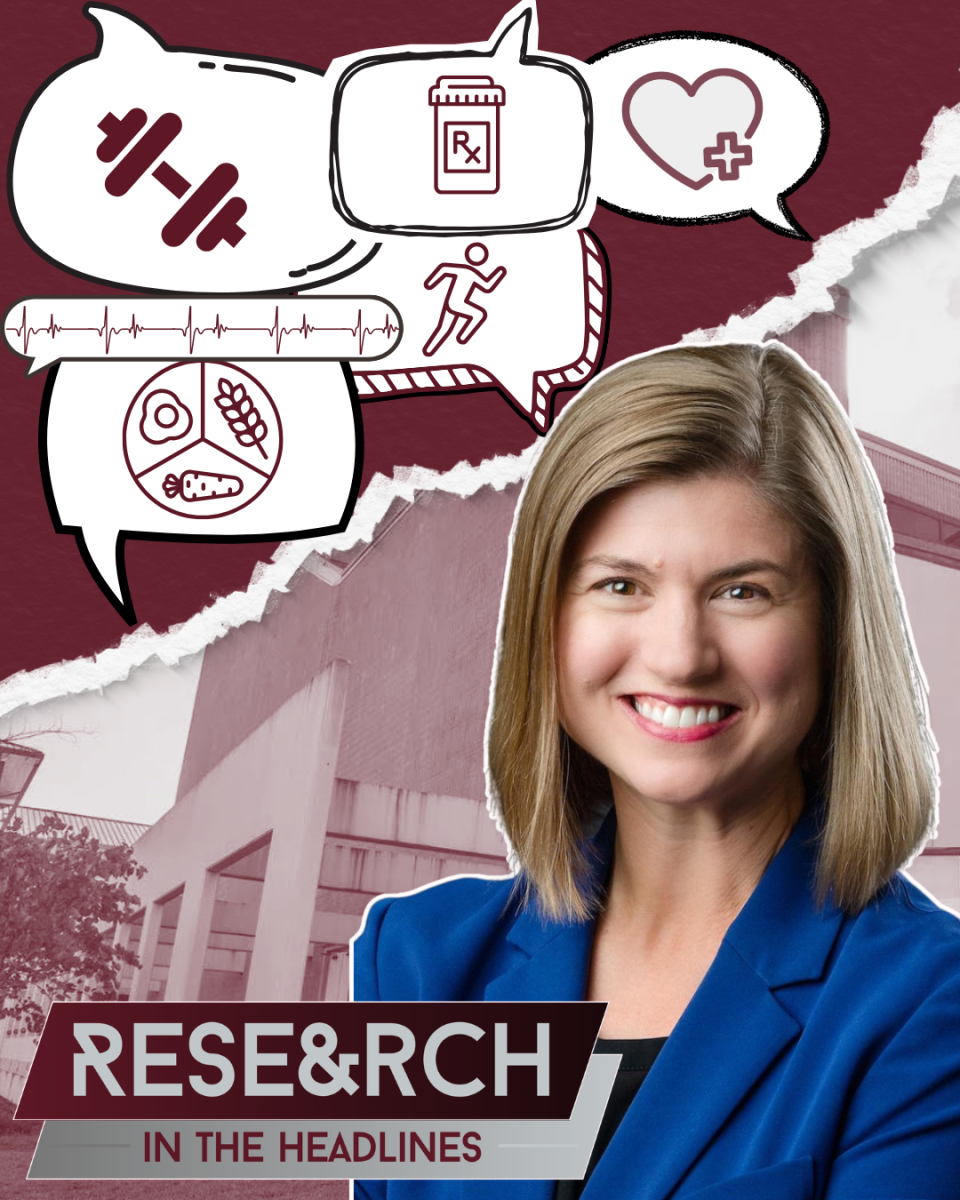
Mississippi State Associate Professor Holli Seitz studies how health messages influence behavior, with research focused on campaigns promoting healthy eating, proper medication storage and vaccine-preventable diseases.
A communication expert in MSU’s Department of Communication, Media and Theatre and a 2025 Grisham Master Teacher, Seitz collaborates widely across MSU as well as with researchers at institutions such as Oklahoma State University and Appalachian State University. Her work centers on health and science communication, message effects, and media effects—areas that have gained renewed attention in the wake of the COVID-19 pandemic and ongoing public health challenges.
“My current work is most likely to be useful for communication practitioners designing health messages. By learning about the populations we serve, the strategies that have been effective in the past and the mechanisms of action, we can better use limited resources to craft the most effective health messages. My hope is that we can help people have the information they need to make decisions that will improve their health and wellbeing,” Seitz said.
Seitz, who holds a Ph.D. in communication from the University of Pennsylvania, contributes to collaborative research on health-related messaging, including studies of marketing campaigns and interventions addressing obesity and opioid misuse.
One recent project, conducted with the Office of Nutrition Education, examined a Supplemental Nutrition Assistance Program—Education (SNAP-Ed) campaign. Coauthored with Laura Downey of Auburn University and Sylvia Byrd, professor emerita in Mississippi State’s Department of Food Science, Nutrition and Health Promotion, the study evaluated “Effects of a Supplemental Nutrition Assistance Program—Education Campaign on Campaign Awareness, Message Recall, and Behavior” (April 2025).
The research assessed how Mississippi residents responded to the statewide SNAP-Ed social marketing campaign and compared results with similar evaluations in California, Ohio, Louisiana and Alabama. The Mississippi campaign, known as “HappyHealthy,” aimed to increase fruit and vegetable consumption and promote physical activity among SNAP-eligible populations.
Researchers used mail invitations, online survey panels and paid Facebook recruitment to reach SNAP-eligible adults. Surveys measured campaign awareness, message recall, exposure frequency and self-reported behavior changes over a 25-month period beginning in 2018.
Results showed that participants who were aware of the campaign were more likely to report eating fruits and vegetables and exercising regularly than those who were not. Stronger recall of campaign messaging was also associated with higher fruit and vegetable intake. The findings offer insight for future nutrition messaging strategies aimed at addressing obesity rates and related health outcomes in the Southeast.
Seitz also has collaborated on research examining prescription medication disposal interventions. In a March 2025 study, “Explanations for Failure to Detect Effects of a Prescription Medication Disposal Intervention for Rural Adults,” she worked with coauthors Je’Kylynn S. Steen, a doctoral student at Auburn University and MSU alumna; Mary Nelson Robertson, an assistant professor in the Department of Biochemistry, Nutrition and Health Promotion; and David R. Buys, associate vice provost and professor in the same department.
That study examined why a mailed intervention encouraging the use of prescription medication take‑back boxes across six Mississippi counties did not yield measurable effects. The research team identified several contributing factors, including limitations in the intervention design, low participant response rates, methodological constraints and persistent stigma surrounding medication disposal.
The findings may help guide future communication strategies designed to reduce opioid misuse and promote safer medication disposal practices.
Currently, Seitz continues collaborative work on vaccine-preventable diseases partnering with Drew Cole, MSU Extension specialist and interim head of the Office of Nutrition Education, on ongoing evaluations of the HappyHealthy campaign.
Seitz’s extensive partnership between disciplines within the MSU community as well as connections between other academic institutions allow her collaborative work to flourish in the conversation of health and science communication. Her data helps in the implementation of preventative health measures and in the fight against obesity and opioid addiction in Mississippi.
Contact: Emma Hardy