
RESEARCH IN THE HEADLINES: Dr. Susannah J. Ural
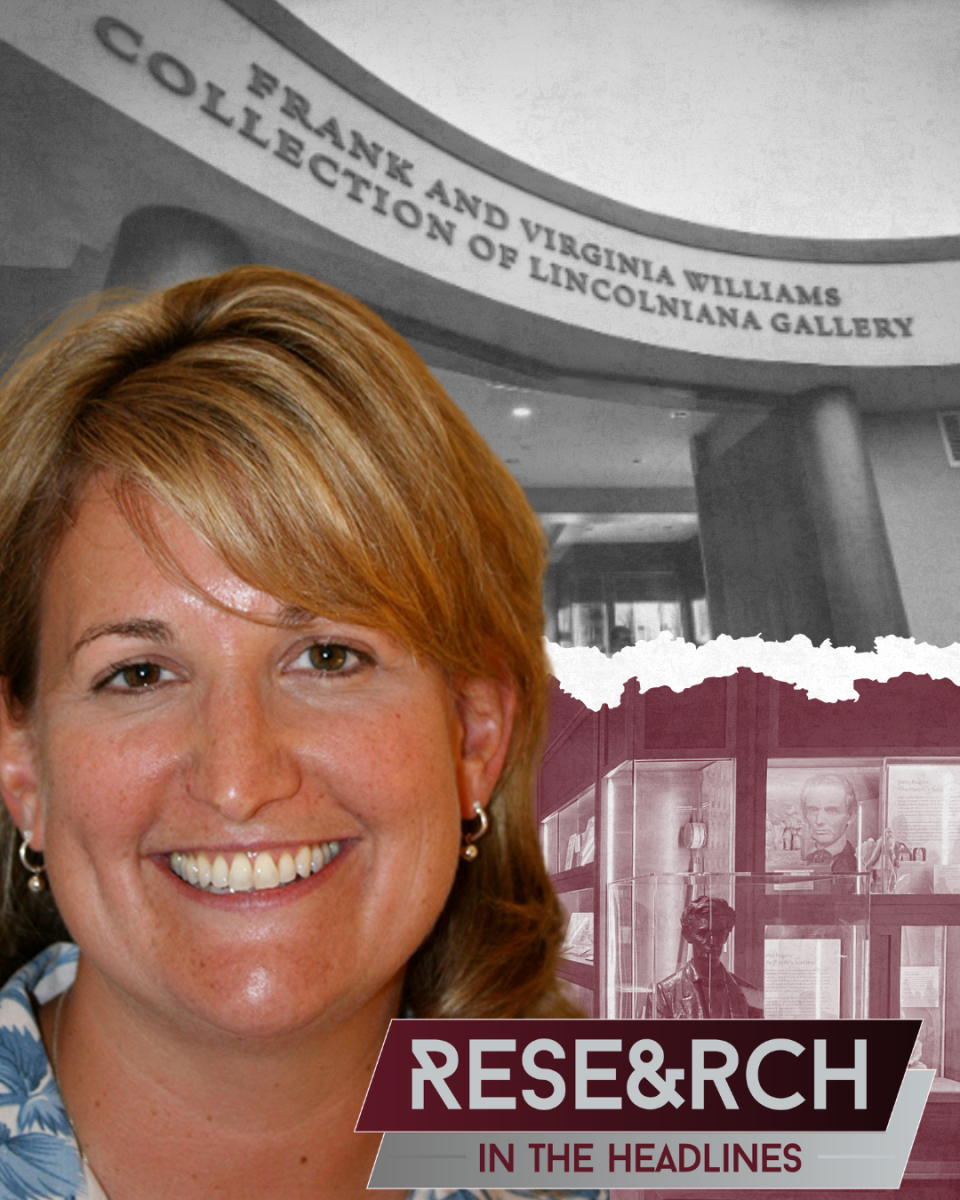
Uncovering new evidence about the earliest Juneteenth celebrations
Contact: Emma Hardy
A rare book in Mississippi State University’s archives is reshaping what historians know about the origins of Juneteenth.
For years, the earliest widely recognized Juneteenth celebration was believed to be an 1866 observance in Galveston, Texas, marking the anniversary of freedom for enslaved people there. But research by MSU historian Susannah J. Ural and her colleagues points to an even earlier celebration of emancipation in New Orleans during the summer of 1864.
“It helps explain the process of emancipation,” said Ural, the Frank and Virginia Williams Chair for Abraham Lincoln and Civil War Studies and a professor in MSU’s Department of History. “It wasn’t a light-switch moment that suddenly freed nearly four million people. It was a starting point. That shift from emancipation to true freedom that included fundamental civil rights required the work of African American leaders, politicians like Lincoln and everyday Americans. It reminds us that democracy is an ongoing process and that we, as citizens, must do our part to strengthen it.”
Ural recently co-authored the article “Before Juneteenth: A Firsthand Account of Freedom’s Earliest Celebrations,” published in The Atlantic. Written with historian Ann Marsh Daly of the University of South Florida, the article draws on a remarkable artifact housed in MSU’s Frank and Virginia Williams Collection of Lincolniana.
That artifact, a red leather-bound volume titled “Emancipation Celebration,” was written and compiled in 1864 by 10 formerly enslaved men. The book documents a series of emancipation celebrations held in New Orleans after Louisiana's Unionist convention abolished slavery in May 1864.
The celebrations stretched across two months and featured speeches, exhibitions, music and public gatherings highlighting Black achievements in art, science, education and skilled trades. Organizers also used the events to advocate for citizenship, educational opportunities and economic justice for newly freed people.
The summer culminated in a large August 1 parade that showcased Black artisans, businesses and community leaders. Religious leader Stephen Walter Rogers and other speakers called for continued support of Black Americans struggling with the economic consequences of slavery and encouraged fundraising efforts to assist those in need.
According to Ural and Daly, these events may represent the earliest documented Juneteenth-style celebrations in the U.S., predating both the famous Galveston observance and similar celebrations held in Charleston, South Carolina, in 1865.
Ural’s research indicates the significance of “Emancipation Celebration” extends beyond its account of these historic gatherings. After its publication, Black New Orleanians sent the volume to President Abraham Lincoln as part of a broader effort to secure citizenship rights for Black Americans and support the permanent abolition of slavery. Lincoln (or possibly his secretaries) responded with a letter of thanks.
The book’s connection to Lincoln also ties directly to another major project currently underway for Ural. Along with Justice Frank J. Williams, a retired chief justice of the Rhode Island Supreme Court, and MSU history doctoral student Kenley Stewart, she is co-authoring “Citizen Lincoln,” a book examining how Lincoln’s understanding of citizenship evolved throughout his life. The volume will draw on 10 rare artifacts from the Williams Collection, including “Emancipation Celebration.”
Ural’s research also extends into the digital humanities.
In 2024, she co-authored “Black Experiences Documented in Civil War & Reconstruction-Era Mississippi Governors’ Papers” with Lindsey R. Peterson, a digital humanities librarian and assistant professor at the University of South Dakota.
The article highlights work from a collaboration––Civil War & Reconstruction Governors of Mississippi Project––which Ural and Peterson co-direct. Launched in 2019, the initiative seeks to make more than 20,000 historical documents from 1859 to 1882 freely available online. Their work is possible because of a partnership with the Mississippi Department of Archives and History and the Mississippi Digital Library, as well as funding from the National Endowment for the Humanities and the National Historical Publications and Records Commission.
The collection preserves the voices and experiences of Mississippians from diverse backgrounds during the Civil War and Reconstruction eras and includes lesson plans, datasets and public resources for researchers, educators and students. Nearly 14,000 documents have already been digitized and made available through the project at https://cwrgmblog.org/visit-cwrgm/.
Through archival discoveries, digital preservation projects and scholarship focused on Abraham Lincoln, emancipation and citizenship, Ural, who earned a Ph.D. in history from Kansas State University, continues to uncover overlooked stories that deepen understanding of the Civil War era and its lasting impact on American democracy and helps to broaden the understanding of the past.