
Fred Corley
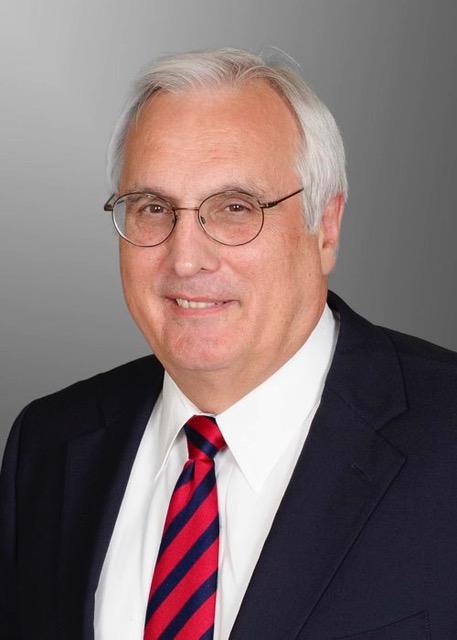
Fred Corley
Bachelor of Science in Chemistry, 1968
College of Arts & Sciences Dean’s Executive Advisory Board
“Mississippi State University provided me the academic tools and experiences I needed to be accepted into and thrive in medical school,” said physician Fred Corley, a 1968 Mississippi State graduate and current San Antonio resident. “These included disciplines, time management, and lots of encouragement from my professors to have a stimulated and inquisitive mind.”
Corley came to MSU from Yazoo City with the goal of becoming a doctor. He arrived on campus as a Bulldog student-athlete in football and quickly became deeply involved in student organizations representing a wide range of student life. He served as a student association officer and was a member of the Kappa Alpha Order fraternity, the Blue-Kay Society, and Omicron Delta Kappa.
“Mississippi State University provided me the tools I needed to succeed,” said Corley, a retired professor of orthopedics at the University of Texas Health Science Center in San Antonio.
His time at MSU brought Corley close to educators and mentors who played a key role in his development. “Professor Sheeley in chemistry was a tough teacher but always available and happy to help, as was John Locke, who taught botany, and Professor Thomas in research in genetics. All these professors and classes gave me a wonderful foundation for my future career.”
While his MSU experience shaped his academic foundation, Corley continued on to earn his medical degree from the University of Mississippi School of Medicine. He completed his medical internship at Parkland Hospital and the University of Texas Southwestern Medical Center in Dallas.
Corley not only saved lives on the operating table but also served his country in uniform. He proudly served in the U.S. Air Force and completed a tour of duty in Da Nang during the Vietnam War.
Serving his country did not delay his professional training, as he completed his orthopedic residency at the University of Texas Health Center in San Antonio in 1978. He went on to complete postgraduate fellowships in both hand surgery and sports medicine at the Princess Margaret Rose Orthopedic Association in Edinburgh, United Kingdom, and at the University of Virginia in Charlottesville.
Highly accomplished in his field, Corley was named to the “Best Doctors” list by UT Health San Antonio in 2017. He is also actively involved in professional medical organizations, including the American Orthopedic Association, the American Academy of Orthopedic Surgeons, the American Society for Surgery of the Hand, and the Texas Orthopedic Association, where he served as president from 2001–2002.
Despite his many accolades, Corley maintains that his greatest success is the impact he has had on students.
“I am most proud of all of the graduates I have trained that have gone on to practice orthopedics all over the country.”
While his career has taken him far beyond Mississippi, Corley continues to reflect fondly on his time at MSU and credits the relationships he built there as foundational to his success.
“The friends I made and the many long relationships I gained while at MSU continue to fulfill my life,” said Corley.
His dedication to MSU remains strong. He is a long-serving member of the College of Arts and Sciences Dean’s Executive Advisory Board and previously served on the MSU Foundation Board. He has supported the university and its students for years, including through the Fred Corley Endowed Scholarship, named in honor of his father’s MSU legacy, which has helped more than 50 students afford their education at MSU.
Known as “the doctor’s doctor,” Corley is widely respected for his compassion and unwavering commitment to his patients. In recognition of his impact, the University of Texas Health Science Center in San Antonio established the Fred G. Corley, MD Chair in Orthopedics.
He remembers his time at MSU as a pivotal and formative period in his life, marked by both academic growth and a deep appreciation for campus life.
“My fondest memory is of the genuine concern that the faculty had for the students and the campus landscape, particularly with the trees in their fall foliage and the aroma of burning leaves,” he said.