
Robert Lenard Barnes Jr.
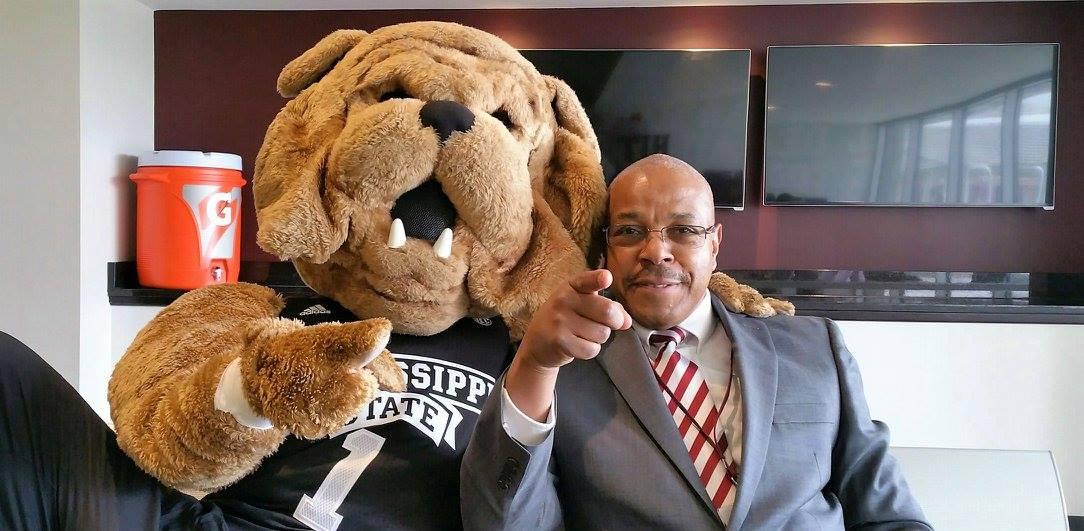
Robert Lenard Barnes Jr.
B.A. Sociology and Anthropology, 1972
College of Arts & Sciences Dean’s Executive Advisory Board
For Robert Lenard Barnes Jr., arriving at Mississippi State University was not the result of a carefully mapped plan. It was, as he describes it, a mix of faith, circumstance, and a single campus visit that changed everything.
“I like to say that it was the providence of God and a 4-H trip that steered me to Mississippi State,” said Barnes, a first-generation college student.
Growing up in Brookhaven, Barnes said he had little exposure to the college selection process. That changed in 1968 when his assistant county agent took him and a classmate to Starkville for a 4-H competition.
“We finished second in a large field, and that experience showed me I could compete, succeed, and ‘fit’ at Mississippi State or anywhere else,” he said. “I fell in love with the campus.”
Barnes earned his sociology and anthropology degree in 1972, drawn to the College of Arts & Sciences during a period of profound social change in the late 1960s and early 1970s.
“As a young Black man, I was watching the world change in real time,” he said. “Sociology and anthropology gave me tools to understand those social changes and help work toward ‘a more perfect union.’”
His MSU experience was shaped most significantly by ROTC, which at the time was mandatory for freshman and sophomore males. When Barnes’ draft lottery number was called early, remaining in ROTC became a defining decision.
“Staying in ROTC gave that reality a structure, purpose, and eventually a calling,” he said. Beyond ROTC, Barnes was deeply involved in student leadership and activism. As a member of Afro-American Plus, the first Black student organization on campus, he helped organize programs and bring speakers such as Fannie Lou Hamer and Charles Evers to campus.
“Being part of AA+ pulled me into leadership and advocacy,” he said.
His involvement continued through the campus YMCA, where he served as president, and the ROTC Cadet Association, where he was vice president. Those roles, he said, taught him how to lead and navigate a predominantly white institution while still pushing for change.
A lasting influence came from Dr. Wallace Murphree, a philosophy and religion professor who became both mentor and friend. “He befriended a group of us Black students at a time when there were no Black faculty members at Mississippi State,” Barnes said.
He recalls being invited to Murphree’s home for Super Bowl VII, a gathering Murphree later described as likely the first truly integrated social event between Black students and faculty at MSU. “He treated us as equals,” Barnes said. “His example taught me that quiet courage, hospitality, and listening can be just as powerful as speeches and titles.”
One of Barnes’ most meaningful memories came at graduation in 1972, when he became the first African American ROTC cadet commissioned at Mississippi State. “Seeing my parents, who had sacrificed so much, watch their son take that oath and get a diploma on a campus that had only recently begun to integrate is a moment I still carry with me,” he said.
After graduation, Barnes was commissioned as an officer in the U.S. Army and began a 31-year military career in transportation and logistics. He served on active duty in Virginia and Germany, later continuing in the Army Reserve with assignments across the United States, Germany, and Kuwait, before retiring in 2004 at the rank of colonel. Along the way, he earned a master’s degree in transportation management from the Florida Institute of Technology and built a civilian career with organizations including Pepsi Cola, General Electric, Systems Management America, and Walmart Logistics, retiring from Walmart in 2010.
While his rank and milestones are notable, Barnes said his proudest accomplishment is mentorship. “What I’m most proud of is seeing the soldiers and young leaders I have mentored grow into mature, capable leaders themselves,” he said. “That is success.”
Now living in Byram, Mississippi, Barnes describes himself as retired from paid work but fully engaged in service. He and his wife, Brigadier General (Retired) Margarett Barnes, are active members of Koinonia Baptist Church in Jackson, where he serves as a deacon. His community involvement has included work with United Way, Boys and Girls Club, Big Brothers Big Sisters, prison ministry, Arise 2 Read, Stewpot Ministries, the American Cancer Society and several veterans organizations.
Barnes remains closely connected to Mississippi State through extensive alumni service. He is a founding chair of the Black Alumni Advisory Council, a board member of the Central Mississippi Chapter of the MSU Alumni Association, a member of the College of Arts & Sciences Advisory Board, and an inductee into the ROTC Wall of Fame. He also supports students through the Colonel Robert Barnes and Brigadier General Margarett Barnes Scholarship and continues work on the “Ring Your Bell and Tell Your Tale” project documenting the history of Black students at MSU from 1965 to 1975.
“Mississippi State is not just where I went to school, it’s an ongoing relationship,” Barnes said. “My goal now is to help light the path for those coming behind us.”
His advice to today’s students is rooted in perspective and purpose.
“Success is measured in inches, not miles,” he said. “Learn the uncomfortable parts of history. Be a vessel, not a victim. Faith matters.”
When asked to describe his Mississippi State and College of Arts & Sciences experience in one word, Barnes chose “transformational.” He said the combination of sociology and ROTC, activism and mentorship, challenge and opportunity shaped a life far bigger than anything he could have planned on his own.