
Record-setting microbiology meeting at MSU puts regional research strengths in the spotlight
STARKVILLE, Miss.—Mississippi State University brought together one of the nation’s most active communities of microbial scientists recently when the university hosted the annual meeting of the South Central Branch of the American Society for Microbiology.
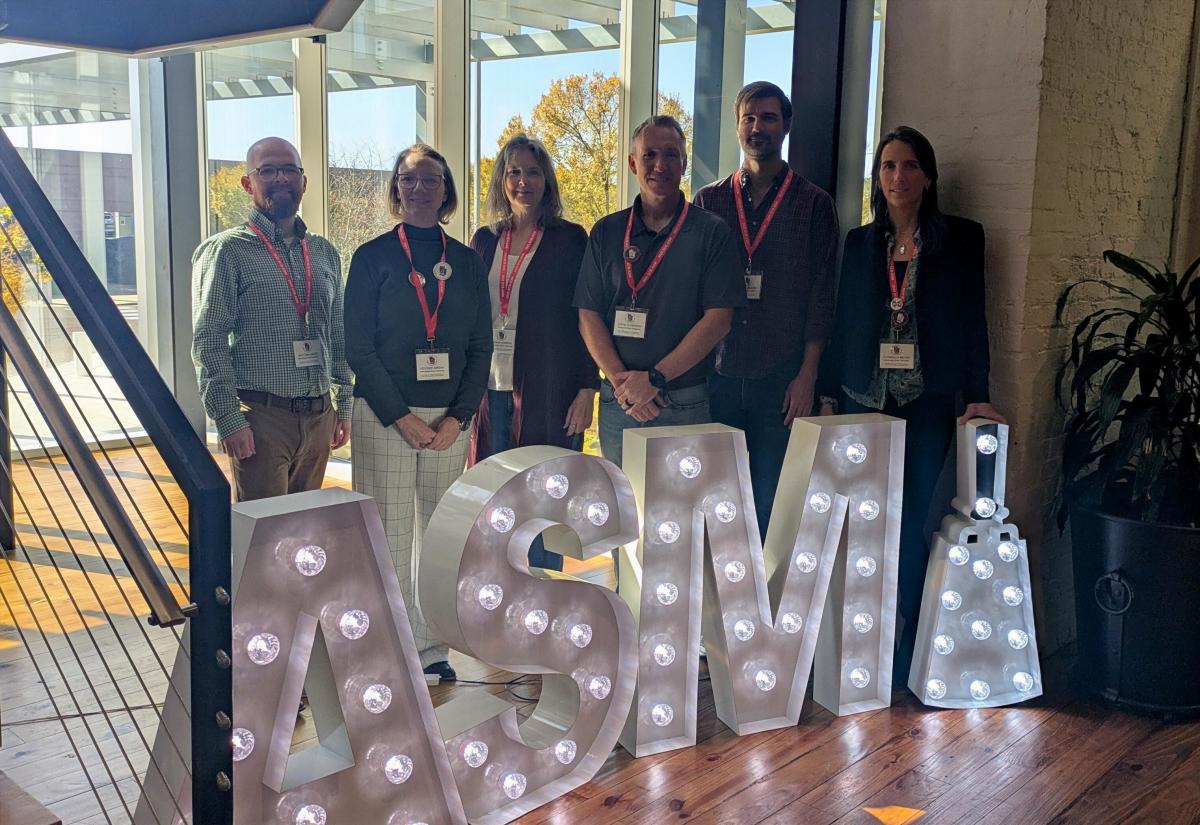
The three-day November conference at The Mill marked the first time since 2012 that MSU served as host for the branch’s signature event, which rotates among Arkansas, Mississippi and Louisiana. It drew the largest turnout in its history, with nearly 220 faculty, postdoctoral researchers, graduate students and undergraduates in attendance. More than 75 of those participants represented MSU.
Justin Thornton, MSU Department of Biological Sciences professor and lead event organizer, said the record attendance reflected both the breadth and urgency of modern microbial research.
“Microbiology touches every part of our lives, from the foods that we eat to the ecology of the environments in which we live,” Thornton said. “Researchers who attended the SCB-ASM meeting are working toward advances in food production and security, bioremediation of soil and water, and development of new vaccines and treatments for human, animal and plant diseases, as well as understanding how helpful microbes benefit our health and ecosystems. Each year, this meeting showcases the important microbial research being conducted in the South Central region.”
The event included a keynote lecture by Matthew Lawrenz, professor and vice chair of the Department of Microbiology and Immunology at the University of Louisville. An internationally recognized expert on the bacterium that causes plague, Lawrenz shared new insights into overcoming nutritional immunity. It also featured the Charles C. Randall Lecture, presented by Hongyan Guo of LSU Health Shreveport. Guo’s research focuses on how antiviral defense is shaped, with an emphasis on herpesvirus infection and host cell death pathways. The lectureship honors early career faculty who have made significant scientific contributions within the geographic region of the South Central branch.
The meeting was organized by Thornton and MSU faculty Heather Jordan, Donna Gordon, Matt Ballinger and Nathan Wisnoski from the Department of Biological Sciences; Florencia Meyer from the Department of Biochemistry, Nutrition and Health Promotion; Bindu Nanduri from the Department of Comparative Biomedical Sciences in MSU’s College of Veterinary Medicine; and Lauren Priddy from the Department of Agricultural and Biological Engineering.
“The meeting would not have been possible without the outpouring of support from MSU and others,” he added. “We are grateful for the individuals and organizations who make it possible for microbial scientists in our region to gather, share ideas, and support one another’s work.”
For more information about MSU’s College of Arts and Sciences and the Department of Biological Sciences, visit www.cas.msstate.edu and www.biology.msstate.edu.
Mississippi State University is taking care of what matters. Learn more at www.msstate.edu.